

Table of Contents
Some links on posts are affiliate links and will earn us a commission from qualifying purchases
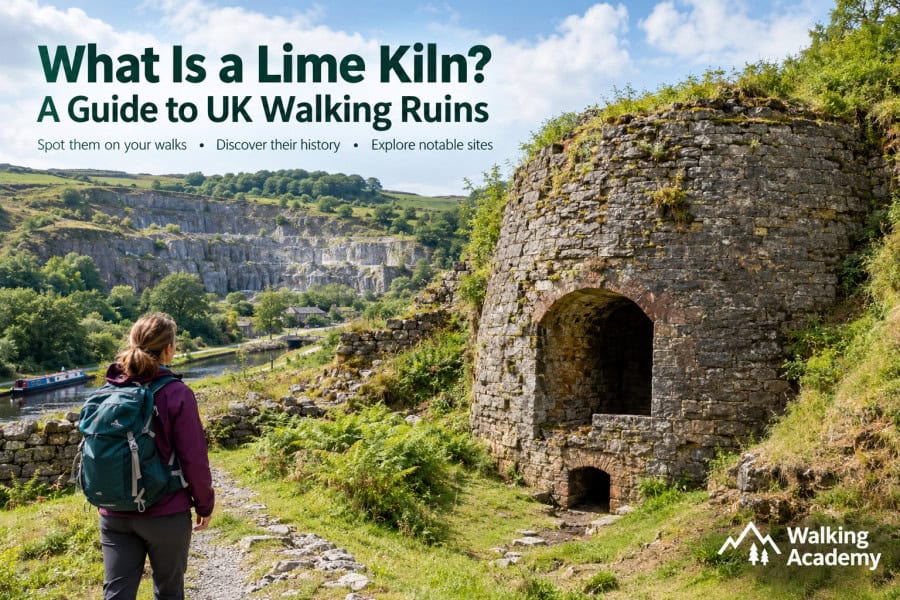
When you’re out walking in the British countryside, you might come across a curious stone structure tucked into a hillside, standing beside an old quarry or hidden among the trees near a disused track. At first glance, it might look like little more than a crumbling ruin. Look a little closer, though, and you could be standing beside an old lime kiln, a reminder of the industries that once helped shape the landscape around you.
Lime kilns were used to heat limestone to temperatures above 900°C, producing quicklime for building work, agriculture and other industries. Before modern construction materials became widespread, these structures played an important role in everyday life.
Today, many former lime kilns can be discovered along footpaths, canal towpaths and countryside trails. Some survive as little more than a hollow in the ground, while others have impressive stone arches and chambers that hint at their industrial past.
Once you know what to look for, spotting a lime kiln can add another layer of interest to a countryside walk. Those weathered walls and blocked-up openings are not just old stones. They tell a story about the people who worked here, the materials they needed and the ways they used the surrounding landscape.
Key Takeaways
- Lime kilns heated limestone to produce quicklime, which was used in building, farming and industry.
- Look for thick stone walls, arched openings, loading ramps and nearby quarry workings when trying to identify one on a walk.
- Many surviving kilns can be found beside old tracks, canals, quarries and rural footpaths.
- These industrial remains are part of Britain’s heritage, so explore them from a safe distance and avoid climbing or entering unstable structures.
How Did a Lime Kiln Work?
Understanding how a lime kiln worked makes these often-overlooked ruins much more interesting. What might appear to be an ordinary stone chamber was once a working installation, where limestone and fuel were brought together to produce a valuable material.
From Limestone to Quicklime
The process began with limestone, a rock that mainly contains calcium carbonate. Workers broke it into manageable pieces and loaded it into the kiln, often arranging the stone in layers with fuel.
In some parts of Britain, chalk or shells were also used where these materials were readily available.
Once the fire was burning, the heat caused the limestone to release carbon dioxide. This chemical process, known as calcination, transformed the stone into quicklime, also called calcium oxide.
Calcium carbonate + heat → calcium oxide + carbon dioxide
Temperatures generally needed to exceed about 900°C for the process to work effectively. If the kiln did not become hot enough, some of the limestone would remain unburnt. Too much heat or prolonged firing could also affect the quality of the finished lime.
It’s quite a contrast to the quiet countryside setting you might encounter today. These structures once contained intense heat, smoke and the hard work of people producing a material that nearby communities depended on.
Fuel, Heat and the Burning Process
If you find a lime kiln beside a quarry or an old transport route, its location is unlikely to have been chosen by chance. Limestone was heavy to move, and fuel was essential, so placing a kiln close to both could save considerable time and effort.
Depending on the location and period, workers used timber, charcoal, peat or coal. Simple clamp kilns were created by stacking limestone with fuel and covering the pile with clay and turf to retain heat. More permanent stone kilns had a purpose-built chamber, often with openings at the base for managing the fire, removing ash and drawing out the finished lime.
Burning could take many hours or several days, depending on the size and design of the kiln. Workers needed to manage the heat and air supply carefully before allowing the structure to cool and removing the quicklime.
When you stand beside a surviving kiln today, it is worth imagining the activity that once surrounded it: carts bringing in stone, fuel being unloaded and workers tending the fire.
What Was Lime Used For?
Quicklime was a valuable product, but it usually needed further processing before it could be used in building work. When carefully mixed with water, it reacts to form slaked lime, or calcium hydroxide. This could then be combined with sand and water to make lime mortar or plaster.
Lime mortar was widely used in stone and brick walls, cottages, bridges, churches and farm buildings. It has properties that make it particularly suitable for traditional masonry, including a degree of flexibility and the ability to accommodate small movements in older structures.
Lime was also used to whitewash walls and improve agricultural soils by reducing acidity. Other industries relied on it for various processing tasks.
So, if you discover a kiln near an old farm, village, church or quarry, you may be looking at a former source of materials that helped build and maintain the surrounding community.
How to Recognise a Lime Kiln on a Walk
One of the pleasures of exploring Britain’s older landscapes is learning to recognise the clues left behind by previous generations. A lime kiln can be surprisingly easy to overlook, particularly when vegetation has grown around it or much of the original structure has collapsed.
There are several features worth looking out for as you follow a footpath through an old industrial landscape.
Look for Unusual Stone Structures
Many traditional lime kilns were built from local stone and had a round or partly round chamber. From the outside, the remains might look like a mound, a hollow in a hillside or a thick stone wall surrounding a recessed opening.
Some have a distinctive curved back wall, while larger industrial kilns may survive as a row of substantial arches.
Look closely at the masonry. The walls are often thicker than you might expect, and some stones or bricks may show signs of heat exposure, including darkening or reddish discolouration.
Small rural kilns can be much less obvious. You might see only a shallow depression, a low bank or scattered stonework where a more substantial structure once stood.
Of course, not every stone arch or hollow beside a footpath is a lime kiln. The surrounding landscape often provides the best clues.
Look for Loading Ramps and Arched Openings
A particularly useful feature is a loading ramp leading towards the top or rear of the kiln. Workers needed a way to get limestone and fuel into the chamber, and a ramp allowed them to move heavy loads from higher ground.
On a hillside, this might look like a broad shelf or an old track that ends abruptly beside a stone structure.
At the lower level, look for openings known as draw holes. These allowed workers to remove the quicklime after firing. Depending on the design, they might appear as arched doorways, narrow gaps or blocked-up entrances.
Not every lime kiln had a chimney. Smaller structures often released gases through openings at the top, while larger industrial installations could have more elaborate flues.
If you spot several of these features together, particularly beside an old quarry, you may have found a genuine piece of Britain’s industrial past.
Read the Landscape Around You
When trying to identify a lime kiln, take a moment to look beyond the structure itself.
Many were built close to limestone quarries or exposed rock faces, where the raw material could be obtained without having to transport it far. You might also notice an old cart track, a disused railway, a canal or a former wharf nearby.
Other clues include piles of broken limestone, quarry scars, ash deposits, ruined storage buildings and the remains of tracks leading towards a settlement.
Sometimes, the landscape tells a more complete story than the kiln alone. A group of arches beside a canal, for example, suggests a different scale of operation from a small stone chamber beside an isolated farm.
Local interpretation boards can help confirm what you have found and explain how the kiln fitted into the area’s history.
If you’re exploring an unfamiliar site, stick to public paths and avoid climbing the masonry or entering chambers. Old industrial structures can be much less stable than they appear.
Why Were Lime Kilns Built Across Britain?
Lime kilns were once an important feature of many British rural and industrial landscapes. Their locations usually reflected three basic requirements: a supply of limestone, a source of fuel and somewhere nearby that needed the finished product.
This helps explain why you can still encounter them in places ranging from remote upland valleys to canal-side industrial sites.
Quarries, Canals and Railways
Limestone was heavy, so it made sense to build kilns close to the places where it was quarried. Workers could break the rock into smaller pieces and feed it directly into the kiln rather than transporting large quantities over long distances.
Fuel was another important consideration. Earlier kilns often relied on locally available wood, peat or coal, while later industrial operations made greater use of coal.
As canals and railways expanded, transporting fuel and finished lime became easier. This helped larger commercial works grow, supplying towns, farms and construction projects over a wider area.
When walking beside an old canal or railway, keep an eye out for industrial remains tucked behind the towpath or hidden among trees. A kiln might be part of a much larger network of quarries, loading areas and transport routes that once kept the local economy moving.
Farming, Building and Local Industry
Agriculture was one of the major reasons for producing lime. Spreading it on acidic soil helped neutralise excess acidity and improve conditions for pasture and crops.
This made lime particularly valuable to farming communities, including those in upland areas where soils could be naturally acidic. A small kiln near an old farm may have supplied a relatively local need.
Builders also relied on lime for mortar, plaster and limewash. A kiln near a church, bridge, manor house or village might have supplied materials for nearby construction and repairs.
Lime had other industrial uses too, including certain manufacturing and water-treatment processes.
The next time you walk past an old stone cottage or cross a traditional masonry bridge, it is worth remembering that a lime kiln somewhere nearby may once have helped make such structures possible.
The Rise and Decline of Lime Burning
Lime burning has a long history in Britain, but many of the surviving rural kilns date from the 18th and 19th centuries.
Earlier production often involved temporary or relatively simple kilns built close to where the lime was needed. As demand increased and transport improved, more permanent stone structures appeared beside quarries and major industrial sites.
During the 19th century, large commercial operations supplied expanding towns, farms, factories and transport networks. Some works contained several kilns or chambers, allowing production to continue more efficiently.
Over time, many traditional lime-burning operations declined as modern cement and other industrial materials became more widely used, alongside changes in farming and manufacturing.
The abandoned structures left behind are now fascinating features of the landscape. A blocked arch, a weathered chamber or an overgrown loading ramp can reveal a little of the work that once took place there.
Notable Lime Kiln Ruins to Visit
If you enjoy combining a countryside walk with a little local history, lime kilns make worthwhile places to look out for. Some survive as impressive industrial structures, while others are smaller reminders of the industries that supported nearby farms and communities.
The following sites offer different ways to discover this aspect of Britain’s heritage.
Craven Lime Works and the Hoffmann Kiln, Yorkshire Dales
Near Langcliffe in the Yorkshire Dales, the remains of Craven Lime Works offer an impressive glimpse into the scale of Britain’s lime-burning industry.
The site includes a large Hoffmann kiln, triple-draw kilns and a Spencer kiln. Together, these remains help demonstrate how lime production developed from relatively simple structures into more sophisticated industrial operations.
The Hoffmann kiln opened in 1873 for the Craven Lime Company. Its 22 chambers allowed limestone to be burned in a continuous circuit, with heat from one chamber helping to warm the next and improve efficiency.
As you explore the site, look for the coal chutes, railway connections and other features that reveal how the operation worked. Information boards and the self-guided trail help bring the remains to life.
It is an especially interesting stop for walkers who enjoy discovering the history behind the landscapes they pass through.
Entry and parking have been described as free, but check current access arrangements before setting out. Facilities are limited, so take anything you need for your walk.
Marple Lime Kilns, Peak Forest Canal
The lime kilns at Marple in Greater Manchester reflect the close relationship between lime production and Britain’s canal network.
The Peak Forest Canal provided a practical route for moving heavy materials. Barges could carry limestone, coal and finished lime, helping connect industrial sites with the communities and businesses that needed their products.
The kilns can be included in a walk around the Marple area, where the canal, its flight of locks, bridges and other historic structures provide plenty of interest.
As you follow the towpath, consider how different the scene would have been when canals were busy with commercial traffic. What is now a pleasant waterside walking route once formed part of a working transport network.
The surviving kiln remains are less extensive than the industrial complex at Langcliffe, but they offer a useful reminder of how waterways supported local industry.
Canal towpaths can become muddy after rain, so wear footwear with good grip and check local access information before visiting.
Toft Gate Lime Kiln, Nidderdale
Near Greenhow in Nidderdale, North Yorkshire, Toft Gate Lime Kiln provides another opportunity to explore the remains of traditional lime burning.
The kiln served local communities, including farming and lead-mining interests. Its lime could be used to improve acidic soils and provide materials for building work.
The stone structure and its deep chamber give an idea of how limestone and fuel were brought together during the burning process. Its roadside setting also highlights the importance of transport in getting raw materials to the kiln and finished lime away from it.
The surrounding Nidderdale landscape is particularly rewarding for walkers who enjoy combining open countryside with traces of Britain’s industrial past. Old quarries, mining remains and historic tracks can all add interest to a day out.
Toft Gate is a useful stop for understanding the area’s working history, even if you only spend a short time examining the kiln itself.
The location is exposed, so check the weather before heading out and take suitable footwear and waterproof clothing.
Greenside Lime Kiln, Kendal
Greenside Lime Kiln in Kendal, Cumbria, represents the smaller-scale lime burning that once took place near many towns and rural settlements.
Unlike the extensive commercial works at Langcliffe, a smaller local kiln reflects the practical need to produce lime for nearby building projects and agricultural use.
The surviving masonry offers a reminder that lime production was not confined to major industrial centres. It formed part of the everyday economy of many communities, even where the remains are now easy to miss.
If you plan to visit, check the current location, access arrangements and any local heritage information beforehand. Visibility and access can vary, and you should avoid entering private land or approaching unstable masonry.
For walkers interested in historic buildings and the development of local towns, these smaller remains can be just as intriguing as the larger industrial sites.
Visiting Lime Kilns Safely and Respectfully
Discovering a lime kiln can be a highlight of a walk, especially when you find one tucked away from the main route. However, these are historic industrial structures, and their age can make them fragile.
A little preparation will help you enjoy the site without damaging it or putting yourself at risk.
Take Time to Read the Information Boards
If interpretation boards are available, stop and read them before exploring the surrounding area.
They may explain when the kiln was built, what it produced, where its limestone came from and how fuel was delivered. Some also show diagrams of the original structure, making it easier to understand features that are now blocked or hidden by vegetation.
Look for marked heritage trails and follow any signs directing visitors towards safe viewing points. These routes may take you close enough to appreciate the structure without requiring you to enter the chamber or climb over the walls.
It is also worth checking official websites before travelling, particularly if the site is on private land or has restricted access.
Check the Route, Terrain and Weather
A lime kiln might be close to a public footpath, but the final approach could involve muddy ground, a steep slope, loose stones or uneven steps.
Wear walking shoes or boots with suitable grip, especially after rain or frost. If the kiln lies on open moorland or an exposed hillside, check the forecast and carry appropriate waterproof clothing.
Take water, a charged phone and a suitable map or downloaded route. Some remote industrial sites have limited mobile reception and few visitor facilities.
If you’re walking with a dog, keep it under control near livestock, steep edges and old industrial workings.
Protect These Historic Remains
The stonework of an old lime kiln can look remarkably solid, but hidden gaps, loose masonry and deep openings can make it dangerous to approach too closely.
Avoid climbing the walls, entering chambers or standing beneath unstable arches. Keep behind barriers and respect any access restrictions, even if the structure looks safe from the outside.
Do not remove stones, disturb archaeological remains, light fires or leave litter behind. These small actions help protect the site for future walkers and visitors.
You can still take photographs and enjoy the atmosphere without touching the structure. Sometimes, the best way to appreciate an old ruin is simply to stand back, look at how it fits into the landscape and imagine the activity that once filled the area.
Frequently Asked Questions
What was a lime kiln used for?
A lime kiln heated limestone to produce quicklime, also known as burnt lime. This was used to make mortar and plaster for buildings, as well as to improve acidic agricultural soils. Lime also had a range of industrial uses.
How does a traditional lime kiln work?
Workers loaded limestone and fuel into a chamber and burned the fuel to heat the stone to temperatures above about 900°C. The heat drove carbon dioxide out of the limestone, leaving quicklime behind. Once the kiln had cooled, workers removed the finished material through an opening.
Why are lime kilns often found on UK walking routes?
Many kilns were built beside quarries, farms, canals and old transport routes. Although their original industrial purpose has disappeared, the tracks and paths around them often remain. This means walkers can still encounter these historic structures while exploring the countryside.
What does an old lime kiln look like?
You might see a rounded stone structure, a hollow mound, a curved wall or a row of arches built into a hillside. Loading ramps, blocked openings, heat-darkened masonry and nearby quarry workings can help you identify one.
Smaller kilns may survive only as shallow hollows or low earthworks, so the surrounding landscape can be just as useful as the structure itself.
When were most lime kilns in Britain built?
Lime burning has taken place in Britain since at least Roman times, but many surviving rural kilns date from the 18th and 19th centuries. During this period, growing demand for lime and improvements in transport helped larger commercial works develop.
Is it safe to explore disused lime kilns?
Treat old lime kilns as potentially unstable industrial ruins. Avoid entering chambers, climbing walls or approaching loose masonry and deep openings. Stay on public paths, follow warning signs and keep children and dogs close.
A final thought for your next walk: Britain’s countryside is full of reminders of how people once worked the land. A lime kiln might not look as dramatic as a castle or as inviting as a country pub, but it can tell you a surprising amount about the landscape around it. Keep your eyes open beside old tracks and quarries, and you may discover a piece of history you would otherwise have walked straight past.
Discover how to spot lime kilns on UK walks, explore their fascinating industrial history, learn how they worked and find notable ruins to visit across Britain.
Recent Posts
When you're out hiking across the British countryside, you might notice unusual steps running across a hillside. They can look like long, grassy banks, shallow hollows or a series of terraces cut...
Roundhouse Explained: Life and Architecture in Ancient Britain
When hiking through the UK countryside, you’ll often spot subtle grassy rings or stone outlines on hillsides and moors. These are the footprints of roundhouses - the primary homes used across...