Some links on posts are affiliate links and will earn us a commission from qualifying purchases
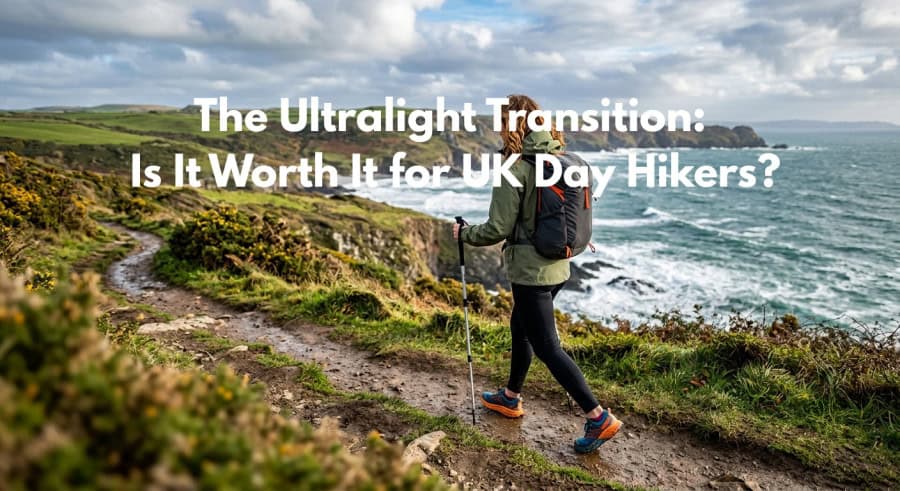
There is a quiet revolution happening on Britain’s footpaths. If you’ve spent any time walking the ridges of the Peak District, tracking the dramatic coastal paths of Cornwall, or winding along the South Downs Way recently, you’ve likely noticed a change in the silhouette of the modern hiker. The massive, rigid canvas rucksacks and heavy leather boots of old are steadily being replaced by minimalist packs, gossamer-thin jackets, and footwear that looks closer to running shoes than military gear.
This is the “ultralight” movement. Born on the thousands-of-miles-long thru-hiking trails of North America, its philosophy is beautifully simple: carry less, experience more. By ruthlessly stripping away unnecessary pack weight, you reduce fatigue, save your knees from a pounding, and cover distance with a newfound sense of agility.
But as the trend dominates social media and outdoor retail displays, UK day hikers are left with a pressing question: Does a philosophy built for the predictable, dry climates of the American West actually work in the unpredictable, damp reality of the British countryside?
Can a 400-gram minimalist waterproof jacket really survive a relentless afternoon of driving Welsh rain, or are we sacrificing our safety margin on the altar of weight savings? Let’s take a pragmatic look at the ultralight transition, where it shines for a day hiker, and where the British weather demands a compromise.
The True Cost of a Heavy Pack
Every seasoned walker knows the creeping fatigue that sets in around mile ten. It starts as a dull ache in the shoulders, moves down into the lower back, and finishes with a heavy, leaden feeling in the thighs. For decades, this was simply accepted as the price of admission for a good day in the hills. We packed for every conceivable apocalypse, stuffed our 35-litre packs to the brim, and lugged eight to ten kilograms of gear on a standard Sunday walk.
When you carry a heavy load, your body changes how it moves. Your stride shortens, your center of gravity shifts forward, and your muscles work twice as hard just to stabilize your posture. By the end of a long day, that fatigue isn’t just uncomfortable – it is a safety hazard. Tired hikers misplace feet, trip on exposed roots, and lose the mental sharpness needed for navigation.
The core benefit of the ultralight philosophy isn’t just about boasting rights on a forum; it is about energy preservation. If you can drop your day pack’s base weight (the weight of everything except food and water) from seven kilograms down to a nimble three or four, the physical relief is immediate. You finish a fifteen-mile walk feeling like you could easily do five more.
The UK Weather Tax: Why Geography Matters
However, a direct copy-and-paste of American ultralight tactics often hits a wall when it meets British geography.
On the Pacific Crest Trail, a hiker might experience weeks of predictable sunshine where a “waterproof” jacket is merely an emergency windbreaker that lives at the bottom of the pack. In the UK, a day hike in July can easily treat you to brilliant sunshine, a drop of fifteen degrees, a biting gale, and a torrential downpour – all before lunch.
British moisture is legendary. It doesn’t just fall from the sky; it hangs in the air as dense hill fog, seeps up through saturated bogs, and gets driven sideways by Atlantic winds. This introduces what we can call the UK Weather Tax.
When gear manufacturers strip weight, they usually do it by using thinner fabrics (measured in denier) and reducing features like zips, pockets, and adjustment cords. While a featherlight, 2-layer emergency shell is fantastic for a sudden summer shower on a casual stroll, it can quickly become overwhelmed by a relentless, three-hour deluge on an exposed moorland. Once a minimalist fabric “wets out” – meaning the face fabric becomes saturated and can no longer breathe – condensation builds up inside, leaving you cold, clammy, and at risk of wind chill.
The Smart Compromise: Where to Trim, Where to Invest
Transitioning to a lighter setup doesn’t mean you have to embrace freezing discomfort or spend thousands of pounds on space-age materials. For the day hiker, the secret lies in a hybrid approach: cutting weight where it’s safe, and maintaining a robust defense where the weather demands it.
Here is how to audit your day-walking gear setup without losing your safety margin.
1. The Pack: The Easiest Ounce-Counter
Traditional day packs are often over-engineered. They feature heavy steel internal frames, thick foam lumbar pads, rain covers, and a maze of dangling straps and pockets. A standard 30-litre traditional pack can easily weigh 1.3 to 1.5 kilograms empty.
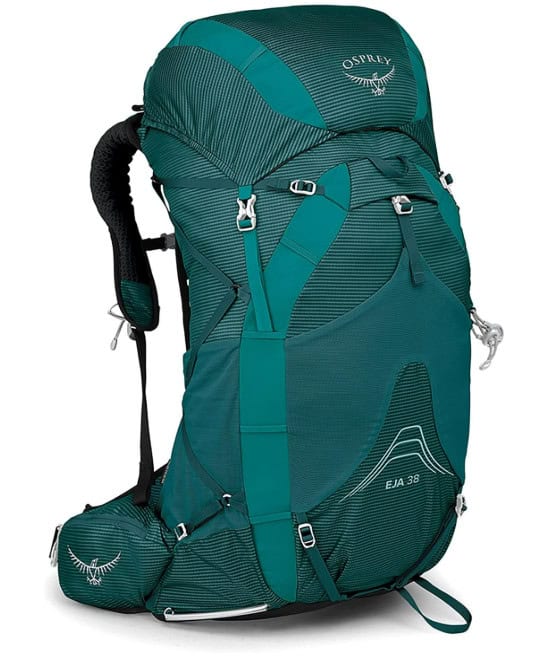
Switching to a lightweight, frameless, or minimally framed pack can instantly cut that weight in half. Because you aren’t carrying twenty kilograms of camping gear, you simply don’t need a heavy internal suspension system.
Top Recommendation: Look at the Osprey Eja 38 (or the Osprey Exos 38). It is widely available on Amazon UK and represents the perfect “gateway” pack – giving you an incredibly lightweight frame and trampoline mesh ventilation without sacrificing the premium comfort Osprey is known for.
If there is one area where you should reject extreme ultralight minimalism, it is your waterproof jacket. A 150-gram running jacket will not protect you during a bad day in the mountains.
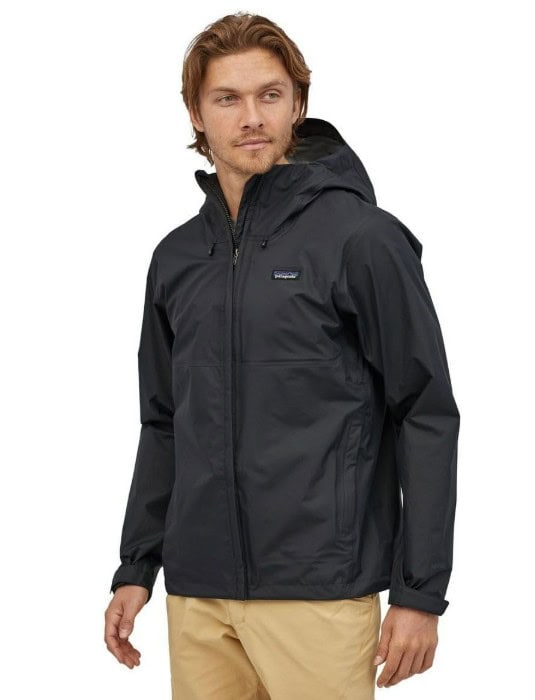
Instead, look for the “lightweight sweet spot.” A proper 3-layer jacket utilizing a proven membrane that weighs between 300 and 400 grams strikes the perfect balance. It provides the structural integrity needed to deflect high winds and heavy rain without feeling like you are wearing a stiff canvas tarp. Ensure it still has a fully adjustable hood with a stiffened peak – essential for keeping horizontal rain out of your eyes.
Top Recommendation: The Patagonia Torrentshell 3L is an absolute gold standard workhorse jacket. It features a robust 3-layer construction that handles relentless British downpours with ease while remaining highly packable. For a slightly lighter, mountain-centric British alternative, the Rab Downpour Plus 2.0 or Rab Arc Eco are fantastic choices frequently stocked on Amazon UK.
An old mountaineering adage states that “a pound on your feet equals five on your back.” Walking in heavy, rigid leather boots requires a massive amount of kinetic energy over the course of 30,000 steps.
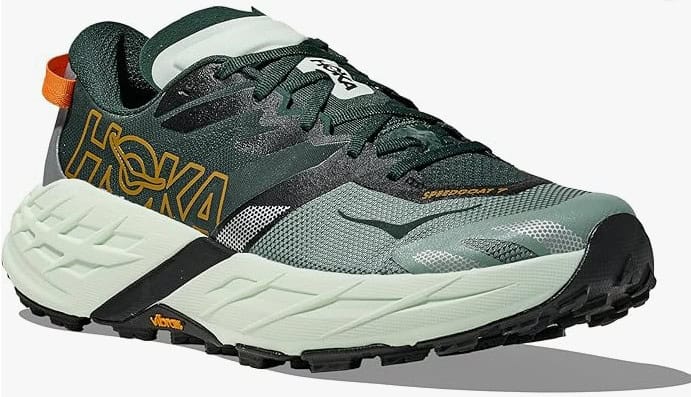
Unless you are navigating severe winter snow, scrambling up jagged rock gullies, or carrying a massive multi-day pack, traditional boots are often overkill. Transitioning to modern, lightweight technical walking shoes or robust trail runners can transform your walking experience.
Top Amazon UK Recommendation: The HOKA Speedgoat 7 (or the Speedgoat 6 variation) offers maximalist underfoot cushioning that saves your joints over long miles on hard-packed trails like the South Downs Way. If you prefer a wide toe box that allows your feet to splay naturally, look into the Altra Lone Peak series, which has a massive cult following among lightweight hikers.
Before you buy a single piece of new gear, the most effective ultralight strategy costs absolutely nothing: stop packing for scenarios that won’t happen.
Take everything out of your current day pack and lay it on a table. Divide it into three categories:
The Essentials: Water, map/compass/navigation tool, first aid kit, headtorch, insulation layer, waterproofs, and food.
The “Just in Case” Items: A second spare fleece, a massive knife, a heavy power bank, three different guidebooks, and an oversized flask.
The Trash: Old wrappers, loose coins, receipts, and duplicate items.
Most day hikers are shocked by how much dead weight they carry out of pure habit. You do not need a 20,000mAh power bank for an 8-mile walk; a small, lipstick-sized emergency charger is plenty. You don’t need a heavy luxury flask if a lightweight insulated bottle does the same job.
Optimizing your pack is about intentionality. It’s about looking at the forecast, understanding your route, and carrying exactly what you need to stay safe, warm, and happy – and not a single ounce more.
The Ultimate UK Day-Hiker “Lightweight Sweet Spot” Kit:
Is the ultralight transition worth it for the UK day hiker? Absolutely – provided it is seasoned with a healthy dose of British common sense.
By adopting a lighter pack and more agile footwear, you liberate yourself from the physical drag that turns the final miles of a beautiful walk into a chore. But remember that our landscapes are uniquely beautiful precisely because they are shaped by wild, unpredictable weather. Keep your robust waterproofs, never compromise on your safety layers, and use the weight you save to carry a slightly better camera, a richer lunch, or simply a lighter spirit as you enjoy the trail.
Can minimalist gear survive a relentless British downpour? Discover how to transition to an ultralight day-hiking setup without sacrificing safety on UK trails.
Long before maps, towns, or smartphones existed, ancient communities were hauling massive rocks into fields and setting them upright - these are known as standing stones. Spanning from single...
You want a reliable rucksack from Amazon that fits your pack style and holds what you need for the trail. Below you’ll find five top-rated hiking rucksacks for 2026 that balance comfort,...