

Table of Contents
Some links on posts are affiliate links and will earn us a commission from qualifying purchases
You don’t need 10,000 steps to improve your health. Aim for roughly 7,000–8,000 steps a day for strong benefits, and even 3,900 steps can lower your risk of dying over time – so small increases matter. That gives you a clear, realistic target that fits into busy days and still moves your health forward.
You can make those steps count by adding brisk walks, short active breaks and simple swaps for sitting time. This post will break down age-based targets, why step intensity matters more than a specific number, and easy ways to track and increase your daily steps without upending your routine.
Key Takeaways
- A moderate daily step goal gives big health gains without extreme effort.
- Short bursts of faster walking boost benefits more than extra slow steps.
- Simple tracking and small habit changes make hitting step goals easier.
How Many Steps Per Day for Optimal Health?
Most adults see big health gains from modest walking increases. Even about 3,900 daily steps links to lower mortality risk, and adding 500–1,000 steps often cuts cardiovascular risk further.
Minimum Step Counts for Health
Research suggests a clear baseline: roughly 3,900 steps per day associates with lower overall mortality in adults who wore trackers in large studies.
For specific heart benefits, some data show reduced cardiovascular death with about 2,300 steps. These figures come from long-term observational studies, so they show strong links rather than proof.
If you currently do under 2,000 steps daily, aim first to reach 3,000–4,000 steps.
Small, consistent increases matter: adding 500 steps per day can lower heart-related death risk by about 7% in some analyses. Use your phone or a simple pedometer to track progress.
Recommended Ranges for Different Goals
Use these step bands as practical targets depending on what you want:
- Basic health and longevity: 4,000–5,000 steps/day.
Good for reducing overall mortality compared with very low activity. - General fitness and weight support: 6,000–8,000 steps/day.
Many studies find the biggest gains in this zone. - Higher fitness and cardiovascular improvement: 8,000–10,000+ steps/day.
Benefits continue but increase more slowly after about 8,000–10,000.
Aim for steady increases. If you sit a lot, split walking into short bursts. Track daily steps and set weekly step goals to build habit without injury.
Understanding Diminishing Returns
Health benefits do not rise linearly forever. Most adults see the steepest gains between very low activity and about 7,000–8,000 steps per day.
Beyond that, benefit still exists but grows more slowly.
Put differently: going from 1,000 to 4,000 steps yields a bigger risk drop than going from 8,000 to 11,000.
That means prioritise getting inactive people up to moderate step counts first. Also consider intensity -brisk walking adds cardiovascular value even at lower step totals.
Practical tip: focus on consistent daily steps and small, measurable increases (for example, +1,000 steps/week) rather than chasing a single magic number.
Step Recommendations by Age Group
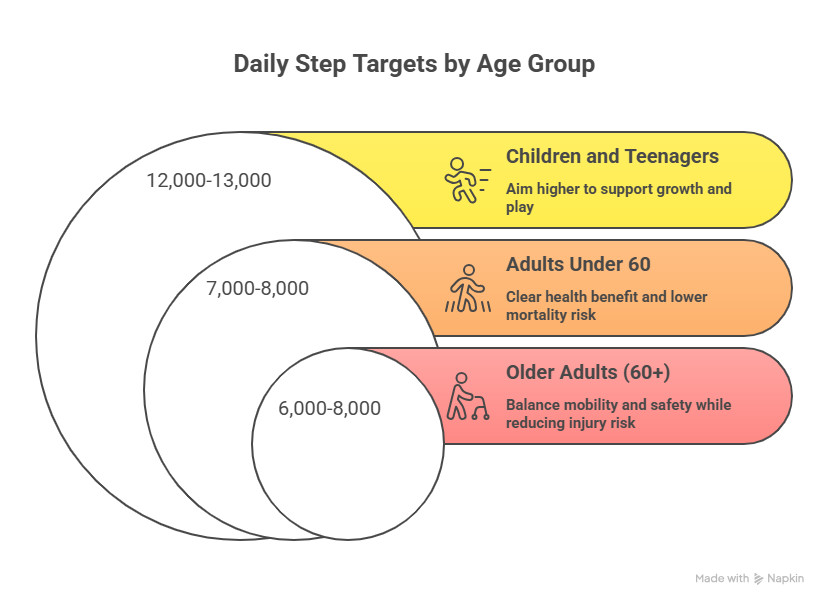
Different ages need different step targets. For children, aim higher to support growth and play. For most adults, 7,000–8,000 steps a day gives clear health benefit. For older adults, 6,000–8,000 steps balance mobility and safety.
Children and Teenagers
Children and teenagers often need the most steps. Aim for about 12,000–13,000 steps per day for many school-age kids to match active play and sports.
Younger kids usually reach these counts through play and school activities. Encourage walking to school, active breaks, and organised sport to keep steps high.
Teens may average fewer steps than younger children. For older teens, target around 9,000–12,000 steps or 60 minutes of moderate activity daily. Monitor screen time and offer active social options to boost daily totals.
If your child has a medical condition or a disability, work with their healthcare team. Use step goals that fit ability and safety while still aiming to increase movement gradually.
Adults Under 60
For most adults under 60, 7,000–8,000 steps per day gives measurable health benefits and lower mortality risk. Many studies show gains up to 8,000–10,000 steps, but benefits level off above that for general longevity.
If you are starting from a low baseline, add 1,000 steps at a time until you hit your goal. Use walking commutes, lunchtime walks, and short active breaks to reach 7,000 or more.
If weight loss or endurance is your goal, higher counts like 10,000 steps can help when paired with faster pace or longer sessions. Track your average steps per day and adjust intensity rather than chasing an exact number.
Older Adults (60+)
Older adults often benefit most from a realistic, steady target of 6,000–8,000 steps per day. This range supports balance, independence and heart health while reducing injury risk.
Prioritise pace and balance exercises, not just raw step count. Short walks spread through the day, plus strength or balance work twice weekly, help prevent falls and keep mobility.
If mobility limits you, even reaching 3,900–4,400 steps daily can cut health risks compared with very low activity. Always check with a clinician before increasing activity, and focus on safe, gradual increases.
Health Benefits of Walking
Walking improves your heart, helps control weight, and supports your mood and joint health. Small changes like adding 1,000 steps a day can lower risks tied to heart disease and boost daily calorie burn.
Cardiovascular Health Improvements
Walking raises your heart rate and strengthens your heart muscle. Studies link as few as 2,300–3,900 steps per day with lower risk of death from heart disease and all causes. Adding 500–1,000 extra steps daily can further cut that risk.
Aim for brisk walking when possible – about 100+ steps per minute – to get stronger benefits for blood pressure and cholesterol. Even moderate-paced walking improves circulation and reduces inflammation. If you have existing heart conditions, check with your clinician before ramping up activity.
Weight Management and Energy Expenditure
Walking burns calories and helps you balance energy intake and output. Rough estimates: a 70 kg adult burns about 200–300 kcal per hour of brisk walking, though exact numbers vary by speed and body size.
Use steps to set practical goals: an extra 1,000–2,000 steps daily adds meaningful calorie burn over time. Combine walking with small diet changes for better weight control. Track steps with a phone or wearable to measure progress and adjust pace for more intense calorie use.
Supporting Mental and Mobility Health
Walking can improve mood, reduce stress, and sharpen focus. Regular walks release endorphins and lower anxiety, which helps you cope with daily pressures and sleep better.
Walking also protects joints, strengthens leg muscles, and preserves balance. That lowers fall risk and keeps you independent as you age. Short, frequent walks are often easier to sustain and still boost mobility and mental wellbeing.
Step Intensity and Quality Versus Quantity
You get the most benefit when steps include periods of faster walking and purposeful movement, rather than only slow, casual steps. Aim to mix steady daily totals with short bursts of higher effort.
Brisk Walking and Moderate-Intensity Exercise
Brisk walking means you walk fast enough to raise your heart rate and breathe harder while still holding a conversation. For most adults, that is about 100 steps per minute or a pace of 3–4 mph (4.8–6.4 km/h). Ten minutes of brisk walking counts as moderate-intensity exercise and helps lower blood pressure, improve fitness and support weight control.
To hit moderate intensity without a stopwatch, use the talk test: you can speak in full sentences but not sing. Try 10–20 minute bouts of brisk walking two or three times daily. You can also add hill walking or carrying light weights to raise effort while keeping step counts similar.
Impact of Daily Walking Routines
Total daily steps matter for long-term health, but how you spread those steps changes outcomes. Frequent short walks break up sitting time and reduce blood sugar spikes after meals. Longer continuous walks at a brisk pace improve cardiovascular fitness more than the same number of slow steps spread through the day.
Practical routine tips:
- Walk 5–10 minutes every hour during long sitting periods.
- Replace short car trips or lifts with a brisk 10–15 minute walk.
- Use stairs, brisk routes, or timed intervals to increase intensity without adding much time.
Tracking and Increasing Your Step Count
You can monitor steps with a simple device and build them into daily tasks. Track your progress, set a clear daily step goal, and use small habits to add consistent movement.
Using Fitness Trackers and Pedometers
Choose a device that fits your routine: a wrist-worn fitness tracker for 24/7 wear, a clip-on pedometer for minimal fuss, or your smartphone if you carry it daily. Check battery life and step-detection accuracy in reviews; some trackers undercount slow walking or certain arm motions.
Wear the tracker on the same side each day and fasten it snugly. Sync data daily so you spot trends and missed days. Use built-in features like hourly move alerts, step history graphs, and weekly averages to see progress. If privacy matters, review app permissions and data sharing settings.
Cross-check one week of tracker data with short manual counts (count steps for one minute of usual walking) to confirm reasonable accuracy. If numbers jump wildly between devices, stick to one tracker to measure your personal trend.
Setting Daily Step Goals
Pick a starting daily step goal based on your current average. If you regularly do 3,000 steps, add 500–1,000 steps per week until you reach the next milestone. Aim for achievable short-term targets so you keep momentum.
Set specific numbers and timelines: for example, 4,500 steps within two weeks, then 6,000 in a month. Use your tracker’s goal feature to remind you and to celebrate hits with small rewards. Adjust goals for rest days, illness, or travel so targets remain realistic.
Define different goals for weekdays and weekends if your routine changes. If your priority is heart health, consider aiming toward 4,000–8,000 daily steps depending on your fitness and doctor’s advice. Log missed days to learn what stops you and make small fixes.
Practical Tips to Add More Steps
Add short walking bursts: walk 5–10 minutes after meals, take two 5-minute breaks each work hour, or park at the far end of car parks. These split sessions add steps without large time blocks.
Turn errands into step opportunities: walk to local shops, use stairs, and get off public transport one stop early. At home, pace while on phone calls or set a goal to do one lap of your building per commercial break.
Use the tracker’s tools: hourly reminders, step-streak badges, and friend challenges to stay motivated. Trackers and step counters work best when paired with simple habits and a clear daily step goal you can see and measure.

Common Myths About Step Counts
You will read why the 10,000 steps idea started and why lower step targets can still give real health gains. Expect clear facts about origins, the evidence, and practical takeaways for your daily walking.
Origins of the 10,000 Steps Benchmark
The 10,000 steps target did not come from modern science. It began in the 1960s as a marketing idea linked to a Japanese pedometer called “Manpo-kei,” which means “10,000-step metre.” Manufacturers used it because the number sounded motivating and easy to remember.
Scientists later tested the idea and found benefits at many step levels. Research shows health improvements start well below 10,000 steps. The 10,000 figure stuck because it is simple, not because it is the minimum needed for health. If you find 10,000 steps helpful, keep it. But know it is a convention, not a strict medical rule.
Why Fewer Steps Still Matter
Studies show big health benefits from much lower step counts. For example, taking around 3,900–7,000 steps per day links to lower all-cause and heart disease mortality in large studies. Each extra 500–1,000 steps can reduce risk further, so small increases matter.
You can gain benefits from walking in short bursts. Adding 500 steps a day or swapping one car trip for a walk helps. Older adults often see strong gains at 6,000–8,000 steps, but even 4,000 steps beats being sedentary. Focus on steady increases that fit your life rather than chasing 10,000 steps as the only success measure.
Frequently Asked Questions
This section gives clear numbers and practical steps you can use. It covers recommended daily steps, health gains from extra walking, low-step benefits, and safe ways to increase your activity.
What is the recommended number of steps to take each day for optimal health?
Many studies show health gains start well below 10,000 steps. For most adults, aiming for about 7,000–8,000 steps a day aligns with lower mortality and strong health benefits.
Younger adults may see benefits up to around 8,000–10,000 steps, while older adults often reach the main benefit range by 6,000–8,000 steps.
Are there benefits to walking more than 10,000 steps a day?
Yes. Walking more can continue to lower your risk of death and improve fitness, but the extra benefit per additional step gets smaller. After about 8,000–10,000 steps, gains tend to plateau for many people.
If you want better fitness or weight control, higher step counts combined with faster walking or other exercise give added effect.
How does daily step count influence overall well-being?
Higher step counts link to lower risk of heart disease and death over time. Walking also helps mood, sleep and blood sugar control, especially when you spread steps across the day.
Step intensity adds some benefit, but total daily volume is the main factor shown in large studies.
What are the minimum daily steps suggested for maintaining a healthy lifestyle?
Research suggests meaningful health benefits begin at roughly 3,000–4,000 steps per day compared with very low activity. A commonly cited protective threshold is around 4,000 steps for lower overall mortality.
Cardiovascular benefits have been seen at even lower counts, near 2,300 steps in some analyses, though higher counts give greater protection.
Can walking fewer steps than the standard recommendation still yield health benefits?
Yes. Any increase from very low activity improves health. Even small gains, like adding 1,000 steps a day, associate with measurable reductions in mortality and heart disease risk.
So if you currently do few steps, modest increases already help your health.
How should one increase their step count safely to reach the ideal daily target?
Raise your steps gradually. Add about 500–1,000 extra steps per day each week until you reach your goal to avoid injury.
Use short, regular walks, break sitting time, wear comfortable shoes, and check with a clinician if you have health issues or mobility limits.
Recent Posts
The Science of Efficient Walking: Optimising Movement for Health and Speed
Walking is a natural activity most people do every day, but how efficiently you walk can make a big difference to your energy use and overall health. Efficient walking means using the least amount of...
Jobs to help you reach 10,000 steps a day: stay fit whilst working
Do you always find yourself struggling to reach 10,000 steps a day? No matter how hard you try, hitting the recommended activity level just seems impossible. Well, why not amp up your step count by...