


Table of Contents
Some links on posts are affiliate links and will earn us a commission from qualifying purchases
You can get fit with either walking or running, but which one suits you depends on your goals, time and body. If you want faster calorie burn and stronger bones, running wins; if you need lower impact, easier consistency and fewer injuries, walking is better.
Think about what fits your life: pick running if you need a quick, intense workout and can recover well, or choose walking if you want steady progress, gentler joints and something you can keep doing long term. Small changes – faster pace, hills, or added weight – can boost either activity to match your fitness targets.
Key Takeaways
- Running gives bigger calorie burn and fitness gains in less time.
- Walking is gentler, more consistent and easier to stick with.
- Match the activity to your goals, health and how likely you are to keep it up.
Walking vs. Running: Key Differences
Both walking and running improve cardiovascular fitness, but they differ in intensity, joint impact, and how many calories you burn. Choose the option that fits your goals, body, and schedule.
Intensity and Impact Explained
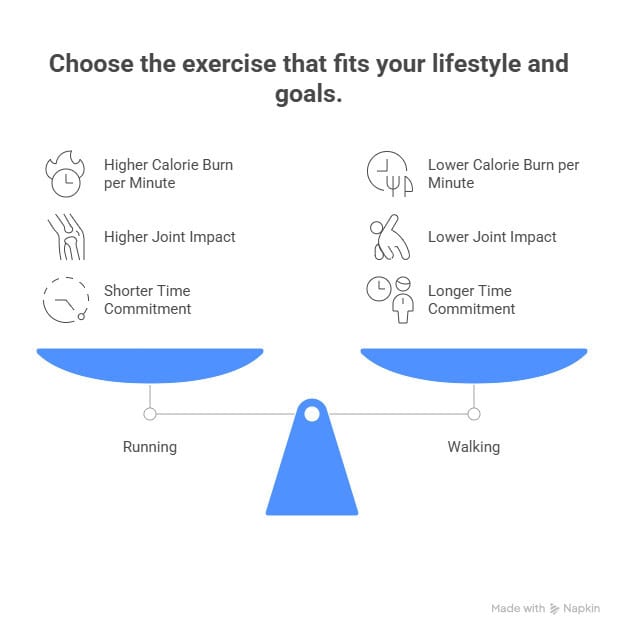
Running is a high-impact exercise. Each stride sends force through your feet, knees and hips. That higher load raises heart rate quickly and builds speed, power and aerobic fitness faster than walking.
Walking is a low-impact exercise. Your joints absorb much less force, so walking feels gentler on knees and ankles. You can still raise your heart rate by walking briskly, doing intervals, or adding hills, but it takes longer to reach the same intensity as running.
If you have joint pain, recent injury, or chronic conditions, walking often lets you train more consistently. If you want to improve race pace, VO2 max or sprint power, running gives a stronger stimulus per minute.
Calories Burned: Walking vs. Running
Per minute, running burns more calories than walking at the same pace. For example, jogging at 8 km/h typically uses far more energy than brisk walking at 5 km/h. That makes running more time‑efficient for weight loss.
Distance matters too. Walking a mile burns fewer calories than running the same mile, but walking longer or adding incline can close the gap. Power walking or walking with a weighted vest increases calorie burn without the impact of running.
Your body weight and speed change the numbers. A heavier person or a faster pace raises calorie use for both activities. Use running for faster calorie burn; use walking if you prefer lower impact and longer sessions.
Accessibility and Convenience
Walking needs no special gear or training. You can walk almost anywhere, at any fitness level, and carry on conversations while you move. That makes it easier to fit into daily life and to stay consistent.
Running demands more physical readiness and recovery. You need good footwear and gradual progression to avoid overuse injuries. Running may require more planning – intervals, longer recovery days, or cross‑training – to stay injury‑free.
If you have limited time, run for intensity. If you need something easy to maintain every day, choose walking. Both count as cardiovascular exercise and boost heart health; pick the one you will actually do.
Health Benefits of Walking
Walking improves your body and mind in ways you can use daily. It builds strength, steadies your heart and lungs, reduces stress, and fits into most schedules with little gear.
Physical Health Advantages of Walking
Walking is a low-impact exercise that lowers injury risk while strengthening muscles in your legs, hips and core. Regular brisk walks – 30–60 minutes most days – help you burn calories, support healthy weight, and improve joint mobility. If you have joint pain, walking poles reduce load on knees and hips and help you maintain balance on uneven ground.
Good walking shoes matter. Choose a pair with firm arch support, a cushioned sole and a stable heel to protect your feet and reduce fatigue. Adding short hill repeats or carrying a light backpack can raise calorie burn without needing to run.
Walking also helps control blood sugar and reduce inflammation. For people with type 2 diabetes, short walks after meals lower post-meal blood glucose. Over months, these steady gains in strength and mobility make daily tasks easier and lower your risk of chronic diseases.
Mental Well-being and Walking
Walking improves mental health through steady, repeatable actions you can do alone or with others. A daily walk reduces anxiety and lifts mood by releasing endorphins and by giving your mind a predictable, calming routine.
Outdoor walking adds benefits from sunlight and fresh air, which can help sleep and vitamin D levels. Walking with a friend or in a group increases social contact and reduces feelings of loneliness. Mindful walking – paying attention to footsteps, breath and surroundings – cuts rumination and helps you manage stress.
If you struggle with low motivation, start with short 10–15 minute walks and build up. Regular, achievable walks create habits that sustain long-term mental health benefits without special equipment or training.
Walking for Cardiovascular Fitness
Walking raises your heart rate, strengthens your heart muscle and improves circulation. Brisk walking at 4–6 km/h or faster for 30 minutes most days increases aerobic fitness and can raise your VO2 max over time, especially if you add intervals of faster walking.
You can track progress with heart-rate zones or perceived effort. Aim to reach a moderate intensity where you can speak but not sing. Using inclines or stair walking pushes cardiovascular load further without the impact of running.
Walking also lowers blood pressure and improves cholesterol profiles when done consistently. Over months, those changes reduce your risk of heart disease. If you have existing heart conditions, check with your clinician; many cardiac rehab plans include walking as a core cardio exercise.

Health Benefits of Running
Running boosts your fitness, strengthens your heart and lungs, and often improves mood and stress levels. You can burn more calories per minute than walking, build leg and core strength, and raise your aerobic capacity with regular sessions.
Physical Health Outcomes of Running
Running increases calorie burn and can help with weight control when paired with a balanced diet. A steady 30-minute run at a moderate pace burns substantially more energy than a 30-minute walk, so it helps create a calorie deficit if weight loss is your goal.
You build muscle in your legs, hips and core. The repeated loading of running improves bone density, which lowers fracture risk as you age. Because running is high-impact, you should progress slowly to avoid overuse injuries such as shin splints or knee pain.
Use practical steps: include rest days, cross-train with cycling or swimming, and add strength work twice a week. These measures reduce injury risk and keep the benefits of running consistent over months and years.
Mental Health and Running
Running can reduce symptoms of depression and anxiety by raising levels of endorphins and lowering stress hormones. You often feel calmer and more focused after even a short run, which helps with mood regulation and day-to-day stress.
Regular running supports better sleep quality and can improve self-esteem through goal-setting and visible fitness gains. Social runs or group sessions add motivation and reduce isolation, which further boosts mental wellbeing.
If you struggle with motivation, set small, measurable goals like time or distance targets. Gradual progress keeps you engaged and makes mental benefits more reliable.
Running and Cardiovascular Improvement
Running is a potent form of cardiovascular exercise that raises heart rate and improves circulation. With consistent training, you can increase your VO2 max, which means your body uses oxygen more efficiently during hard efforts.
You lower resting blood pressure and improve cholesterol profiles with regular running. These changes reduce long-term risk of heart disease and stroke when combined with healthy diet and smoking avoidance.
Aim for a mix of steady runs and higher-intensity intervals to get the best heart benefits. Monitor effort with perceived exertion or a heart-rate strap to ensure progressive yet safe improvement.
Weight Loss and Fitness Goals
Both walking and running can help you burn calories and lose weight. Your choice should match your current fitness, injury history, and how much time you can commit each week.
Which Burns More Calories?
Running burns more calories per minute than walking because it uses more energy to move you faster. A common rule of thumb is about 100 calories per mile when running, but your actual burn depends on your weight, pace, and terrain.
For walking, a brisk pace (about 4–4.5 km/h) burns fewer calories per minute, but you can offset that by walking longer. Adding incline, speed, or a weighted vest raises calorie burn for walking.
If you weigh more, you burn more calories doing the same activity. Short, intense runs give a bigger calorie-per-minute return. Longer, steady walks can match total calorie burn if you spend enough time moving.
Walking or Running for Weight Management
Choose the option you can do consistently. Running gives faster calorie burn and can fit into shorter sessions, which helps if you have limited time.
Walking is kinder on joints, lowers injury risk, and suits daily habits like commuting or long walks. That makes it easier to maintain over months.
Combine both for the best results: use running or faster intervals to raise intensity, then add regular walks for recovery and extra daily calorie burn. Track your walking pace, weekly minutes, and running sessions to match your weight-loss targets.
Injury Risks and Prevention
You will learn which injuries crop up most with running, what hazards walking can bring, and simple ways to lower your risk. Focus on how often you train, your footwear, and any pain that stays or gets worse.
Common Running Injuries
Running puts repeated force through your feet, shins and knees, so overuse injuries are common. Shin splints cause aching along the front of the lower leg after increases in distance or hard surfaces. Stress fractures are tiny bone cracks, often in the metatarsals or tibia, and start as focal pain that worsens with running and improves with rest.
Plantar fasciitis shows as heel pain, especially first thing in the morning or after long runs. Achilles tendonitis causes stiffness and pain at the back of the heel, worse with uphill or speed work. Runner’s knee (patellofemoral pain) gives a dull pain behind the kneecap when you squat, climb stairs or run downhill.
You lower these risks by avoiding sudden jumps in mileage, rotating hard and soft surfaces, and addressing tight calves or weak hips early. If pain persists for more than two weeks, stop running and get a professional assessment.
Walking-Related Safety and Injuries
Walking is low impact but not risk-free. Blisters and calf strain happen with poor-fitting shoes or sudden increases in pace. Overuse problems like plantar fasciitis can occur if you walk long distances in unsupportive footwear or on uneven ground. Trips or slips on wet or uneven surfaces can cause sprains or fractures, especially in older adults.
You should check shoe fit, replace shoes every 300–500 miles, and avoid sudden jumps in daily distance. Pay attention to heel pain that’s worst in the morning – that often indicates plantar fasciitis. Use walking poles on steep or slippery terrain to reduce fall risk and protect knees and hips.
Tips for Injury Prevention
Manage training load: increase weekly distance by no more than about 10% and include at least one rest or easy day. Mix intensities: combine hard sessions with recovery walks or cross‑training to reduce overuse injuries.
Choose shoes for your activity and terrain. Running shoes with proper cushioning and support suit higher-impact sessions; walk in shoes with firm heel cups and flexible forefeet. Replace worn footwear regularly.
Address strength and flexibility. Do twice-weekly exercises for glutes, hips and calf muscles to cut risk of shin splints, Achilles issues and runner’s knee. Stretch calves and the plantar fascia after exercise, and use foam rolling for tight quads and IT bands.
Watch pain signals. Sharp, focal pain, night pain, or pain that alters your gait needs medical review. For suspected stress fractures, stop impact activities and seek imaging. Use ice, short rest periods and anti-inflammatory measures for acute flare-ups, and follow a graded return-to-activity plan.
Enhancing Your Walking or Running Routine
Small changes to pace, incline and gear can raise your heart rate, build strength and reduce injury risk. Focus on targeted tweaks you can repeat: increase incline, use power walking technique, try rucking or poles, and never skip a proper warm up and cool down.
Incline Walking and Power Walking
Incline walking boosts calorie burn and works your glutes and calves more than flat walking. Set a treadmill to 5–10% or choose hilly routes outdoors. Short, steep sections (30–90 seconds) act like intervals and raise your aerobic capacity.
Power walking uses a faster stride and stronger arm drive to raise intensity without running. Keep your torso upright, swing your arms from the shoulders, and aim for a cadence of about 120–140 steps per minute. Wear supportive shoes and keep steps quick and short to protect your joints.
Combine both methods: start with a 5–10 minute flat warm up, do 10–20 minutes of incline or power-walk intervals, then return to an easy pace. Track pace or perceived exertion to progress safely.
Rucking and Walking with Poles
Rucking adds weight in a backpack to increase strength and calorie burn while staying low-impact. Start light – 5–10% of your body weight – and build by about 1–2 kg every few weeks. Keep the load centred and high on your back to protect your shoulders and spine.
Walking poles reduce joint load and improve posture. Use them to engage your upper body and increase power on ascents. Plant poles slightly ahead and push back with each stride to work your lats, triceps and core.
Combine rucking and poles when hiking long routes to spread load and stabilise your gait. Always check your pack fit and pole length before long sessions, and listen to sharp discomfort that signals you need to reduce weight or adjust technique.
Importance of Warm Up and Cool Down
A proper warm up primes muscles and raises heart rate slowly, cutting injury risk. Spend 5–10 minutes on dynamic moves: brisk marching, leg swings, hip circles and easy walking. Add a few short pick-ups (15–30 seconds) to prepare your breathing for higher intensity.
Cool down helps your heart rate and breathing return to normal and limits stiffness. Finish with 5–10 minutes of easy walking, then stretch key areas: calves, hamstrings, quads and hip flexors. Hold each stretch for 20–30 seconds without bouncing.
If you run, include stride-outs in the warm up and foam rolling after the cool down. If you walk with a weighted pack or poles, pay extra attention to shoulder, neck and lower-back mobility after exercise.
Choosing the Best Option for You
Decide based on your goals, injury history, and daily schedule. Think about how much time you have, whether you need to protect joints, and if you aim to boost cardiovascular fitness or bone strength.
Personalised Fitness Considerations
Consider your main goal first. If you want higher VO2 max and faster calorie burn, running will raise your cardiovascular fitness quicker. If you need lower impact and steady activity, brisk walking protects joints while still improving heart health.
Check your body and history. Previous stress fractures, knee pain or low bone mineral density change what’s safe. Running increases bone loading, which can help bone mineral density, but it also raises injury risk. Walking with a weighted vest or incline can add bone and muscle benefit without the same impact.
Pick shoes that match the choice. Good walking shoes should cushion and support; running shoes need more shock absorption and a secure fit. Start slowly and progress weekly by no more than 10% in time or distance to reduce injury risk.
How to Combine Walking and Running
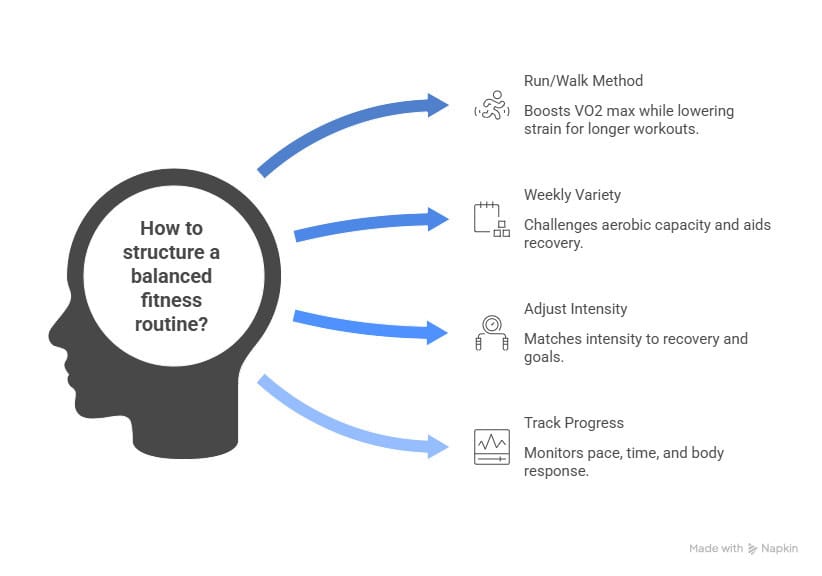
Mixing both often gives the best results. Use a run/walk method for longer workouts: run hard for 3–5 minutes, then walk for 1–2 minutes. Repeat for 30–60 minutes to boost VO2 max while lowering overall strain.
Structure your week with variety. Do two shorter runs to challenge aerobic capacity and one long walk for recovery and joint-friendly endurance. Include one strength session to support bone mineral density and reduce injury risk.
Adjust intensity to match recovery and goals. When tired or sore, swap a run for a brisk walk or add hills to walking to increase load. Track sessions so you see progress in pace, time, and how your body responds.
Frequently Asked Questions
This section gives clear, practical answers about how walking and running affect fitness, injury risk, calories and time needed. Use these points to match exercise to your goals, health and schedule.
What are the comparative health benefits of walking and running?
Walking improves circulation, helps blood sugar control, supports joint health and reduces stress with low impact.
Running boosts cardiorespiratory fitness, increases bone-loading forces that can strengthen bone, and often raises mood and fitness faster.
How do walking and running impact cardiovascular fitness?
Running raises heart rate and breathing more, so it typically improves VO2 max faster than walking.
Brisk walking still strengthens your heart and lungs over time, especially if you walk at a pace that keeps your heart rate in a moderate zone.
Can walking provide similar fitness results to running?
Yes, if you match the total exercise dose. Fifteen minutes of vigorous running often equals about 150 minutes of moderate walking for some outcomes.
You can also increase walking intensity with hills, speed intervals or added weight to gain similar cardiovascular and calorie benefits.
What are the injury risks associated with running versus walking?
Running is higher impact and generally has a greater risk of overuse injuries like stress fractures, tendonitis and knee pain.
Walking has a much lower musculoskeletal injury rate and is safer if you have joint problems, are older, or are returning from injury.
How much time should one spend on walking or running for optimal fitness?
Aim for at least 150 minutes per week of moderate activity (brisk walking) or 75 minutes of vigorous activity (running) as a baseline.
You can split sessions across the week; short runs or walks of 10–30 minutes still add up and provide real benefits.
Is one more effective than the other for weight loss and overall health?
Running burns more calories per minute than walking, so it can be more time-efficient for weight loss.
For overall health, both reduce risk of chronic disease and improve longevity when done regularly; choose the option you can keep doing consistently.
Comparing walking vs running for overall fitness and health – looking at time, impact on body, aims and targets
Recent Posts
How Walking Improves Cardiovascular Health: Proven Heart Benefits
You can protect and strengthen your heart with a simple, low‑risk habit: walking regularly raises your fitness, helps lower blood pressure and cholesterol, and cuts the chance of heart problems...
The Science of Efficient Walking: Optimising Movement for Health and Speed
Walking is a natural activity most people do every day, but how efficiently you walk can make a big difference to your energy use and overall health. Efficient walking means using the least amount of...