

Table of Contents
Some links on posts are affiliate links and will earn us a commission from qualifying purchases
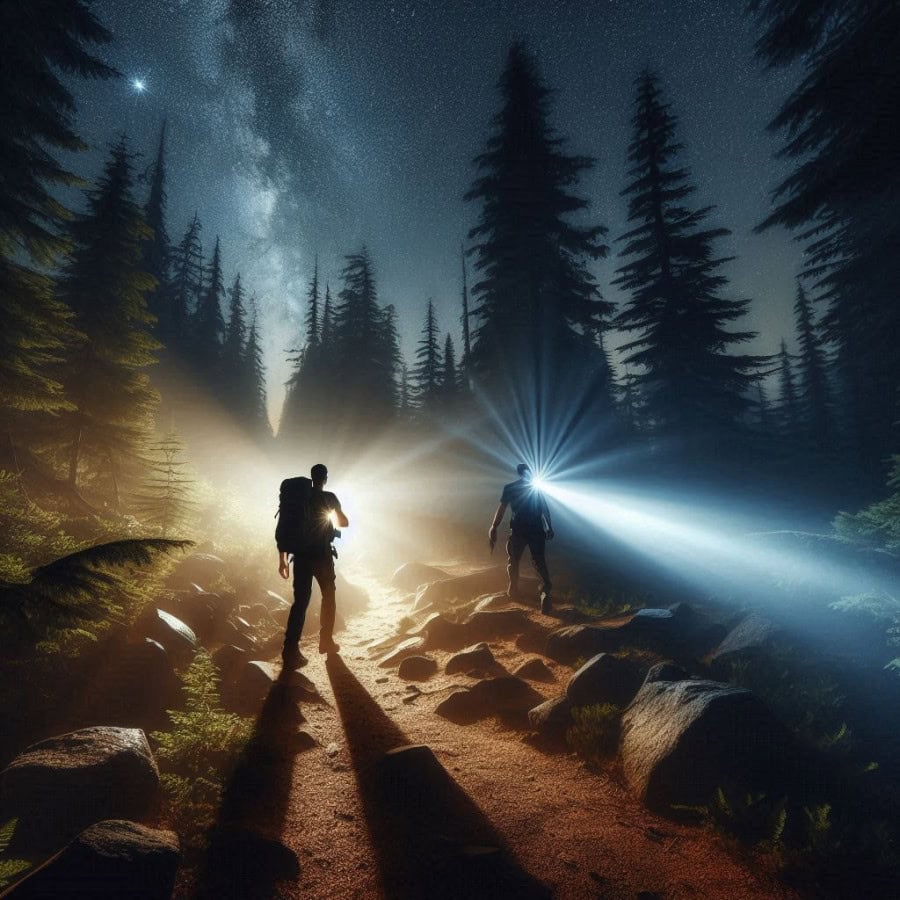
Night hiking offers an entirely different perspective on the outdoors – the trails are often quieter, the air is cooler, and the solitude is unmatched, especially when viewing a spectacular sky full of stars away from city light pollution.
However, this beautiful experience is entirely dependent on safety, which hinges on reliable and effective lighting. A quality light source is not merely a convenience; it’s essential for spatial awareness, rapid navigation of uneven terrain, and ultimately, enjoying the trail with absolute confidence.
For those seeking a hands-free solution, the debate usually boils down to two major contenders: the newer chest light vs headlamp, the traditional option.
Each option presents a unique philosophy on how to best illuminate the path. This guide provides a detailed analysis of their design, performance strengths, and drawbacks, helping you determine which illumination tool is the superior choice for your personal hiking style and specific trail conditions.
What Is a Chest Light?
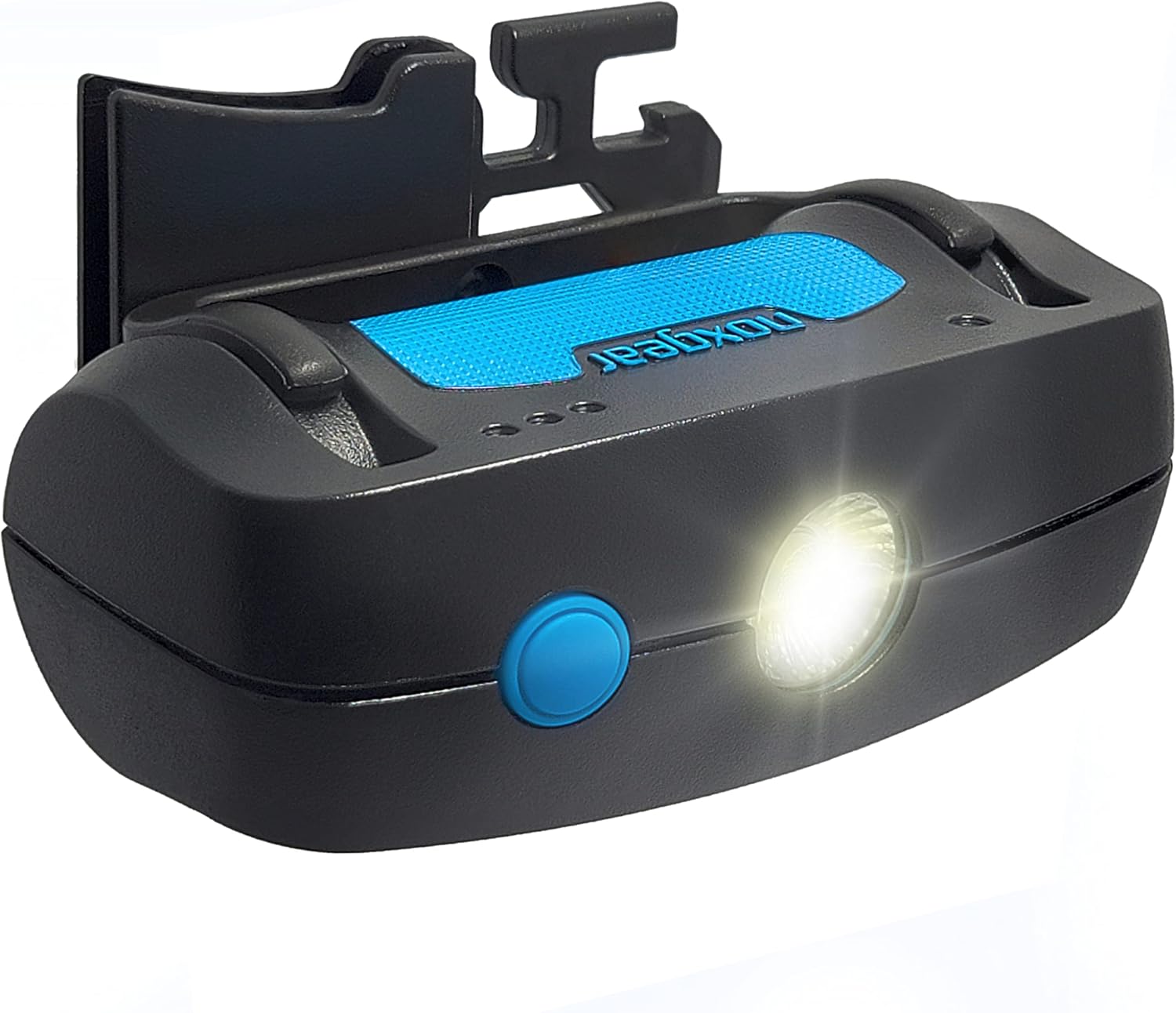
A chest light is an innovative solution to hands-free lighting, designed as a harness that secures the main light unit across your torso, typically sitting around the sternum.
This lower positioning means the light beam is consistently aimed at the ground immediately ahead of you, offering a reliable field of view independent of your head movements.
The core difference from a headlamp is its focus: instead of tracking your gaze, it prioritizes illuminating the critical zone where your feet are landing.
How It Works
The design centres around maximizing stability. By fixing the light closer to your body’s center of gravity, chest lights virtually eliminate the “bobbing” or “bouncing” effect common with traditional headlamps, especially during high-motion activities like trail running.
Furthermore, most models incorporate a powerful front lamp for the trail and a bright, often red or flashing, LED on the back strap to significantly enhance visibility to companions or approaching traffic, a crucial safety feature.
Pros and Cons
What Is a Headlamp?
The headlamp is the undisputed legacy champion of outdoor illumination, characterized by a simple, elastic headband and a light housing that rests directly on the forehead.
Its enduring appeal lies in its intuitive operation: the light beam is intrinsically linked to your eyes, providing true hands-free, directional lighting that is unparalleled in versatility.
Types of Headlamps
Modern headlamps offer specialized functionality far beyond basic on/off.
Standard Battery-Powered models use AAA or AA batteries, offering a reliable power source that is easily replenished in remote areas. Rechargeable models utilize integrated or external lithium-ion batteries (often USB-C), which are economical for frequent use.
Beyond power, they offer different beam patterns: a Spot Beam for focused, long-distance vision; a Flood Beam for wide, close-range visibility (ideal for camp chores); and Red Light modes to preserve night vision and avoid dazzling others.
Ultralight models prioritize a minimalist design, often trading battery life for maximum weight savings.
Pros and Cons
Chest Light or Headlamp : Side-by-Side Comparison
| Feature | Chest Light | Headlamp |
| Beam Angle | Lower, illuminates the ground directly | Adjustable, follows your gaze |
| Stability on Uneven Terrain | Very stable, minimal bounce | Can shift or bounce with movement |
| Comfort | Even weight distribution, no forehead pressure | May cause forehead pressure/headaches |
| Battery Life | Often longer (larger battery packs) | Varies by model, limited by head weight |
| Hands-Free Performance | Yes | Yes |
| Visibility to Others | Highly visible from front and back (rear safety light) | Less visible to oncoming hikers, risk of glare |
Key Takeaway
The choice fundamentally comes down to motion versus direction.
If your primary concern is high-speed movement – running, power hiking, or tackling highly technical and uneven ground – the chest light offers superior stability and depth perception that reduces trip hazards.
However, if your activity involves frequent stopping, gear management, or scanning the environment -such as traditional backpacking, climbing, or general camp chores – the intuitive, line-of-sight directionality and versatility of the headlamp make it the indispensable tool.
Best Uses for Each
When a Chest Light Is Better
- Trail Running or Fast Hiking: The fixed position on the torso is highly resistant to the rhythmic vertical motion of running, completely eliminating the distracting bounce of a headlamp. This keeps the light focused consistently on the few feet of trail you are actively moving over, providing the necessary visual confidence for speed.
- Highly Uneven or Technical Terrain: On ground littered with rocks, roots, or sharp elevation changes, the chest light’s low-angle beam is a significant safety advantage. The pronounced shadows it generates make the contours of the trail immediately obvious, allowing for faster, more accurate foot placement and mitigating the risk of ankle rolls or falls.
- Group Activities and Urban Safety: The combination of a front-facing beam and a dedicated, often flashing, rear safety light makes you significantly more visible from both directions. This is invaluable when sharing a multi-use path with cyclists or other runners, or when hiking in a large group to maintain a clear line of sight to others.
When a Headlamp Is Better
- Camping, Backpacking, and Camp Chores: Versatility reigns supreme here. Whether you are searching for a dropped tent stake, stirring dinner on a small stove, or adjusting a backpack strap, the light is always precisely where you need it, following your gaze without requiring you to move your body.
- Climbing, Scrambling, or Mountaineering: These activities demand that you constantly scan upward and outward for handholds, anchors, or route markers. A headlamp provides critical, hands-free illumination exactly where your eyes are focused, allowing you to maintain three points of contact while safely assessing the next move.
- General Hiking & Emergency Use: Due to its simple, compact form factor and directional control, a headlamp is the superior tool for tasks like map reading, administering first aid, or performing equipment maintenance. Its universal design makes it the de facto standard for every emergency kit.
Recommended Products
Top Chest Lights
- Noxgear Tracer – Bright, stable, and designed for runners and hikers. See more on Amazon.
- Knog Quokka Run Chest Light – Lightweight and rechargeable, ideal for short night hikes. See more on Amazon.
Top Headlamps
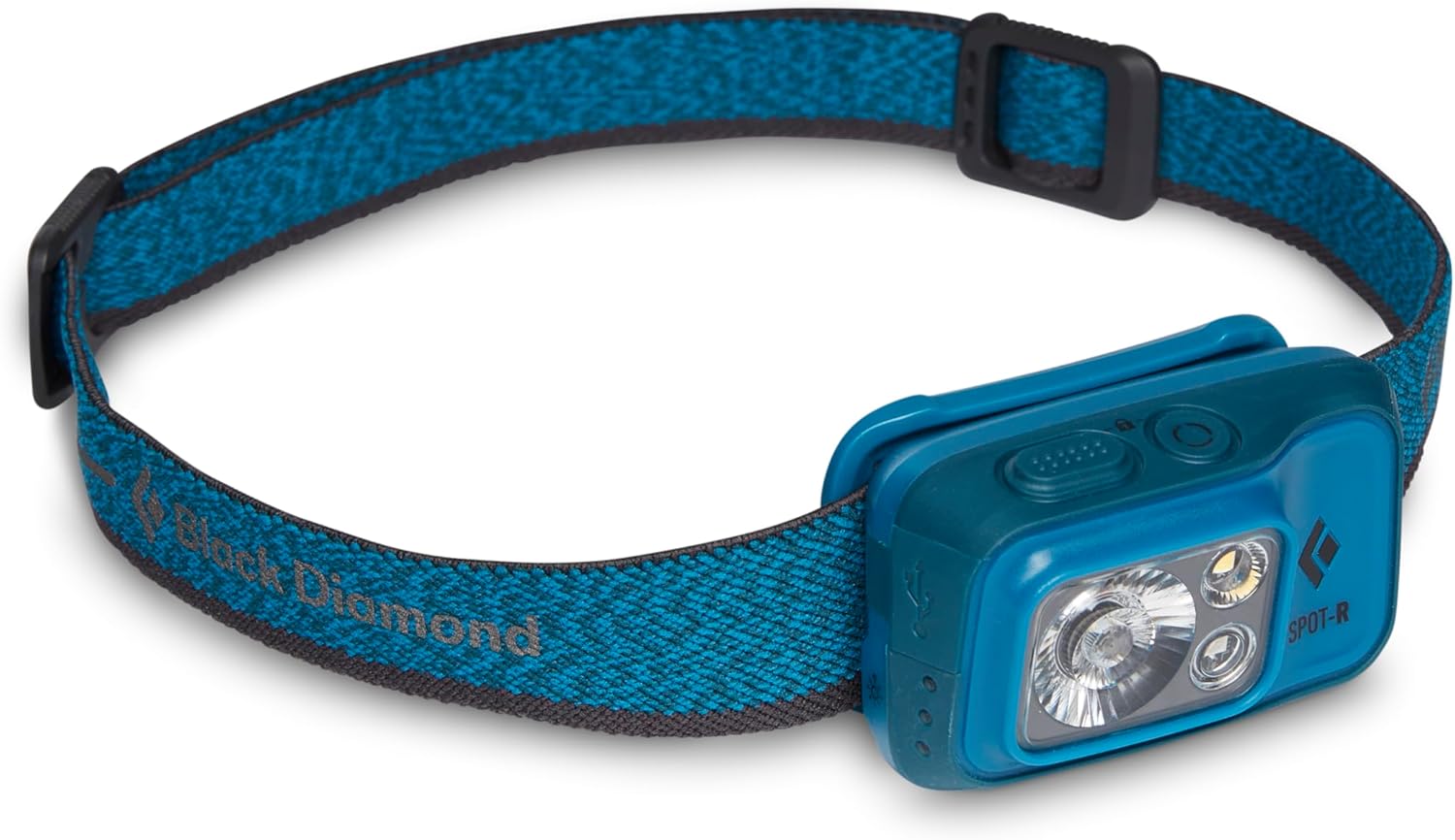
- Black Diamond Spot 400-R – Compact, rechargeable, and powerful with multiple lighting modes. Buy on Amazon.
- Petzl Actik Core – A favourite among hikers; offers excellent brightness and battery life. Buy on Amazon.
- BioLite HeadLamp 325 – Ultralight and comfortable for long hikes or runs. Check out on Amazon.
Frequently Asked Questions
Is a chest light better than a headlamp for night hiking?
Chest lights provide better depth perception and reduce glare, while headlamps excel for general visibility and map reading. Many hikers carry both.
What is the brightest lightweight hiking headlamp?
Models from Petzl, Fenix, and Black Diamond in the 300–500 lumen range are bright yet lightweight.
Which hiking lights last the longest on a single charge?
LED lights with regulated output can last 20–120 hours, depending on mode and battery size.
Are rechargeable headlamps reliable for multi-day hikes?
Yes. Pair with a 5,000–10,000 mAh power bank for trips over two days.
What colour light is best for night hiking?
White for trails, warm white for snow/contrast, red for preserving night vision.
How do waist lights compare to headlamps for trail visibility?
Waist lights reduce shadows and improve depth perception, while headlamps are better for scanning ahead.
What is the best light for early-morning winter hikes?
A combination of a high-lumen headlamp and a waist or chest light with cold-resistant batteries works best. Warm white light helps reduce snow glare.
Conclusion – Chest Light vs Headlamp
Ultimately, both chest lights and headlamps have earned their place as excellent tools for the nocturnal adventurer. The final decision is a personalized one, hinging entirely on your planned activity, speed, and terrain.
The chest light is the high-performance choice for dedicated motion – providing the rock-solid stability, advanced trail perception, and long-haul comfort necessary for technical running and fast hiking.
The headlamp, conversely, is the adaptable workhorse, offering unparalleled directional control, maximum versatility for non-moving tasks, and a minimal, universal form factor.
Savvy outdoor enthusiasts often recognize the complementary nature of the two, adopting a dual-light system: the chest light as the primary navigational beam for the trail, and a lightweight headlamp reserved for camp chores, reading, and close-up tasks.
By selecting the right tool for the job, or even both, you secure your safety and unlock the full, immersive experience of exploring the world after sunset.
Recent Posts
The Race Against the Sunset: Mastering Winter Hiking in the UK
You know that moment in winter when you glance at your watch and it’s only 3:30 p.m., yet the sky has already gone that moody shade of navy blue? Yep – that’s your cue to start walking a bit...
Whether you're hiking in the early morning hours, late at night, or just need some extra light to navigate a trail, a reliable headlamp can make all the difference. But with so many options on the...